Bloomberg: America Is an Olympic Powerhouse, College Sports Rules Could End It
America’s dominance in the Olympics may be impacted by a shakeup in college sports funding, with schools potentially cutting programs.


America’s dominance in the Olympics may be impacted by a shakeup in college sports funding, with schools potentially cutting programs.

Roughly 41 Olympic sports programs have been cut across NCAA Division I, affecting at least 1,000 student-athletes after the settlement was announced by the NCAA in May 2024, said Sam Seemes, CEO of the US Track and Field and Cross Country Coaches Association.

Olympic and non-revenue sports are facing an uncertain — and in many cases, grim — future.

“We are concerned that the new financial obligations placed on schools will force administrators to divert their attention and resources away from non-football and non-basketball sports – the programs where the majority of NCAA student-athletes participate,” the coaching associations for volleyball, wrestling, track and field, and swimming and diving wrote in a joint statement after the settlement was approved. “This is no hypothetical. Budget cuts and program eliminations have already taken place in anticipation of today’s outcome, and more are likely to follow.”

Over the past three months, a growing number of universities have added or dropped entire sports programs on the eve of dramatic changes coming to college athletics under the $2.8 billion NCAA settlement.

The new roster limits are eliminating thousands of Division I roster spots — mostly for football and Olympic sports. Here’s why, and what’s next.

Hundreds of college prospects, many of them participating in Olympic sports, are in a precarious position as the signing date approaches. Schools have eliminated roster spots and, for some, scholarship offers that they were once promised. Meanwhile, several dozen current college athletes are being notified that they are no longer part of their teams — some of the notifications arriving after the fall semester even began.
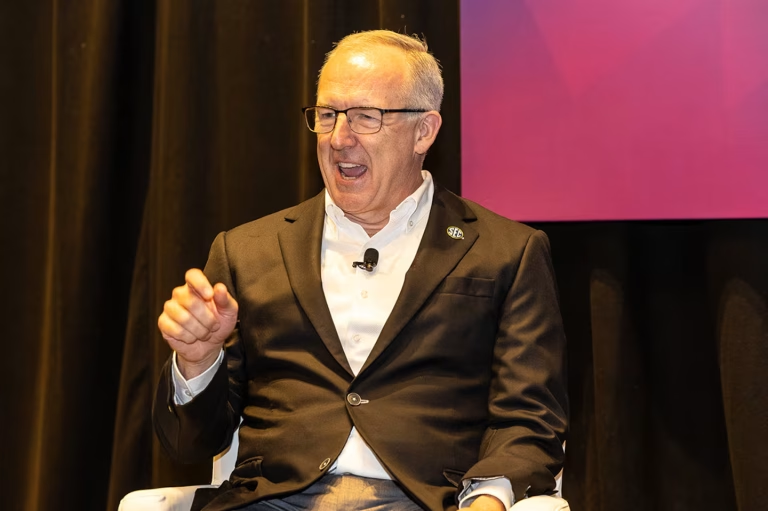
“Not that anyone listens to my football media days speeches, but in 2019, the line was, ‘When you change the economics of college sports, you alter the Olympic development program in this country,’” SEC Commissioner Greg Sankey